Genesis 12:1-9 and Romans 4:13-25
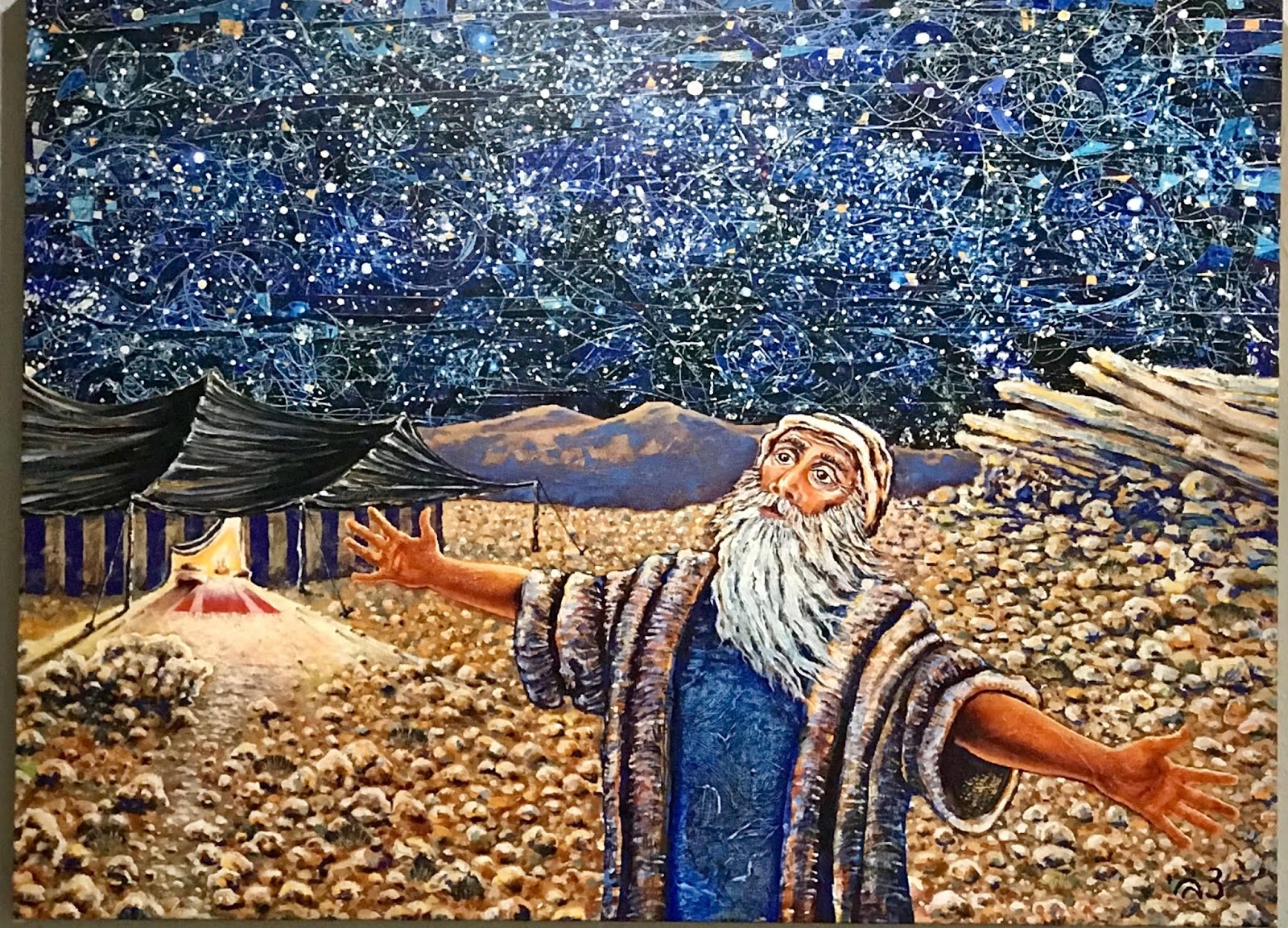
Back in my early days in the Coast Guard, I had a buddy named John Abraham. You generally go by your last name in the service, and he would often be addressed as “Abram.” He would always correct folks: A-bruh-HAM! It kind of became a running joke and, eventually, we all started calling him A-bruh HAM! Good times. And the Abram we read about in today’s lesson from Hebrew Scripture would also one day become A-bruh-HAM, not by his own act or intention, but because it was the will of his Heavenly Father. You see, Abram is one of the earliest figures in Hebrew prehistory, who lived around 3,900 years ago, during the bronze age… before a time when there were Israelites, Hebrews or Jews. He was a tent-dweller, and likely a “hunter/gatherer,” who originally hailed from a place called Harran, in what is now southeast Turkey. And, out of the blue, God chose him to become the earliest progenitor of what would become the Jewish, Christian and Islamic faith traditions. God said that he would make of Abram’s line a “great nation” …and then God told Abram what he so often tells folks after he’s made them an awesome promise: GET MOVING! And that’s what Abram did: he packed up all his people and “stuff” and stepped out in faith towards the future that God had promised to provide.
When Abram arrived in Canaan, he still had the glow of a new convert about him. He moved from place to place, setting up altars wherever he went, staking claim to the land God had given him. But Abram had a problem: Canaan was a pretty big country, and all he had was himself and his wife Sarai, his nephew Lot and some servants to take possession of and occupy it. Where was the “great nation” God had promised? Although Sarai was very beautiful, she’d not given him any children, and he wasn’t getting any younger. And then came a famine, so the point was moot… there wasn’t enough for him and Sarai to eat, let alone kids, so he had to pull up stakes and head to Egypt. Suffice it to say, Abram’s confidence in the future was being sorely tried and yet… he remained faithful. Apart from the time he had to shop Sarai out to Pharoah for a bit for fear of being sacked (She’s my sister, really she is… Genesis 12:10-20), Egypt turned out to be a pretty good gig for Abram. Not only did they have plenty to eat, but Pharoah “dealt well” with Abram, and got him started off in a brand-new trade… as a herder!
After the famine had receded, Abram took his small clan (still no babies) back to Canaan, where he had a parting of ways with his nephew Lot. They had both grown so prosperous that they could no longer live together. Only misery loves company, after all. So, Abram went to Hebron and built another altar, while Lot took up residence in Sodom (Genesis 13). Abram later had to go to Lot’s rescue when he got himself embroiled in a conflict between the King of Sodom and some other regional potentates, and was captured. But Lot was family, after all, and not only was Abram able to redeem his nephew, but he also brought back a fortune in additional “people and stuff,” captured from the defeated warlords. And here’s the thing: apart from the tithe of the spoils he paid to King Melchizedek of Salem, priest of “God Most High”, he gave the rest away. He professed to rely solely on that same God Most High for his providence. So, despite his faults, Abram was faithful. (Genesis 14).
And God didn’t leave Abram hanging. Despite his continued childlessness, God swore a covenant with Abram to fulfill his dearest desire: to make his offspring as numerous as the stars in heaven. And Abram believed… and “the Lord reckoned [his faith] to him as righteousness” (Genesis 15:6). And you guys know the convoluted story of the way all that worked out: of Abram’s faith becoming a little wobbly… leading to his impregnation of Sarai’s servant girl, Hagar. And of Hagar giving birth to a son, Ishmael, and all the strife and turmoil that brought to Abram’s household (Genesis 16). And finally, the fulfillment of God’s promises: of Abram becoming Abraham, and Sarai Sarah, and the birth of their firstborn son, Isaac… all in God’s time. By this point, Abraham was coming up on one-hundred years old! It had been nearly twenty-five years since his initial encounter with God Most High… a lifetime for most folks back then. And although he’d experienced his share of fears and failures, Abraham had managed to hold onto his faith in God’s enduring Providence. And God reckoned it to him as righteousness. And we’ll read more about Abraham and Sarah… and Isaac… and Hagar and Ishmael over the next few weeks but, for now, I want to talk a little about the Apostle Paul’s word to the Romans in today’s epistle.
Paul talks a lot about faith. In fact, Paul’s teachings on the preeminent role of faith in salvation helped stoke the fires of the great Reformation debate back in the sixteenth century. But we don’t need to go down the Reformation rabbit hole today (i.e., faith vs. works, &c.)… maybe one day, but not today. Today, I want to talk briefly about faith vs. righteousness under the Law (that is Hebrew Law, the Law of Moses, the Torah), which is related to its connection to salvation… but different. You’ll remember that Paul (formerly named Saul) was a Pharisee before his conversion. And not only a Pharisee, a Pharisee’s Pharisee… In his own words: “circumcised on the eighth day, a member of the people of Israel, of the tribe of Benjamin, a Hebrew born of Hebrews; as to the law, a Pharisee; as to zeal, a persecutor of the church; as to righteousness under the law, blameless” (Philippians 3:5-6). He was pretty proud of his pedigree and his record of strict adherence to the Law before he got knocked off his high horse on the road to Damascus in the days following the stoning of Stephen, a heinous act in which he’d been complicit (Acts 9). Jesus stopped Saul in his tracks and gave him a new name and a new set of marching orders… orders that turned his world upside-down, and “re-purposed” his life in the truest sense of the word. Surely, Paul retained his unique personality… the Book of Acts and the Apostle’s letters to all his far-flung congregations testify as much to Paul’s zeal and argumentativeness as to his piety. And he, himself, remained true to the Law of Moses, though he did not impose those requirements upon his gentile converts to Christ. Paul understood the importance of the Law, and yet… he was stuck on the preeminence of faith.
Paul noted that Abraham, who was chosen by God to be the father of many nations, lived and prospered long before the existence of Hebrew Law. He was not a Jew. Neither was he Christion nor Muslim. And yet, he trusted God’s promises, and that was “reckoned to him as righteousness.” His faith carried him forward and blessed every aspect of his life. “Laws are fine and dandy,” Paul seems to be saying, “but they’re limited: If something isn’t strictly against the law, then it’s OK, right? I think we all know better than that… at least we should. And if certain important ‘rights and wrongs’ are not addressed by the law, then why should pin our hope for salvation to something that is incomplete? Faith is different, however. Faith is between us… and God. It’s all-encompassing and invokes a law that cannot be found in its entirety in books or statutes, but that is scribed on our hearts (cf. 2 Corinthians 3:3),” said Paul. And that law, my friends, is love. Jesus came to show us the way to the father (John 14:5-14). And the way to the father is through love… of God and neighbor (Matthew 22:35-40, Mark 12:28-31 and Luke 10:25-28). And the new commandment to love one another as he loves us? That’s how folks will know we belong to Jesus (cf. John 13:33-35).
It’s a pretty tall order, isn’t it? Much more difficult, sometimes, than the temporal righteousness we demonstrate by simply “checking the boxes” to stay in compliance with the laws of men. And yet, it’s everything. Faith evidenced through love. There is only one true righteousness, and that is God’s righteousness. God knows we’ll never be able to be truly righteous… because God is God, and we are not. But God will reckon our faith to us as righteousness, just as he did with Father Abraham so many years ago. So, walk in faith and walk in love, my brothers and sisters. And one day, like Abraham we’ll arrive at our own promised land.

